
What If Affordable Housing isn’t the Problem After All?
1. False Trade-Off
In today’s market, most people believe you can’t have it all.
They believe that:
- If a home is affordable, it can’t be spacious and it certainly won’t have all functional spaces of a real home: a defined place to sleep, bathe, wash, cook, host and relax.
- If it’s located in a prime estate, it can’t be affordable.
- And if it feels luxurious, it must be out of reach for the average buyer.
The logic makes sense. With land prices rising and construction costs squeezing margins, developers are forced to choose—cut space, cut quality, or raise prices.
And that’s how the market settled for a compromise.
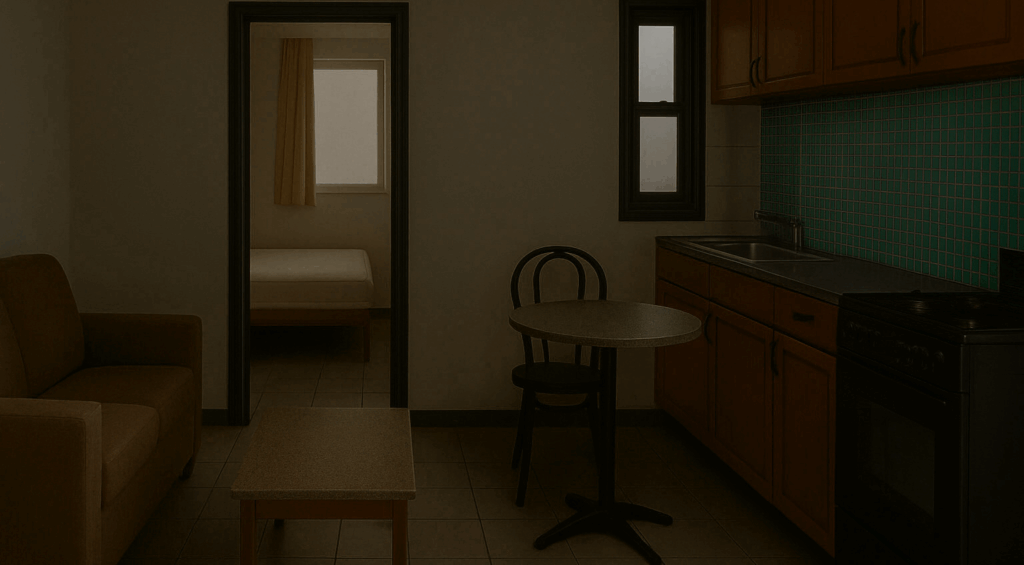
That compromise is evident in the ugly, tiny, dark apartments you see everywhere with the tag ‘affordable’.
Affordability comes at the cost of livability, comfort and dignity to residents.
2. The Thinking That Got Us Here
But here’s what no one talks about:
The real reason these homes are underwhelming isn’t just because of the cost of land or construction materials:
It’s the mindset driving how homes are designed and built.
Somewhere along the way, we accepted the idea that “affordable” means basic.
That good design is a luxury, and comfort is optional if the price is low enough.
As long as the home has four walls, a place to sleep, cook and bathe, it’s considered a win.
Never mind if:
- It’s poorly lit.
- The kitchen is too small to cook in or no actual space exists – just a corner kitchenette.
- The bathroom is cramped and opens into the living room.
- There is no dedicated laundry space to wash your clothes.
Or if the tenant leaves after six months, frustrated and drained, because something marginally better came up nearby.
This isn’t just bad design. It’s bad economics.
When tenants can’t stay, an investor won’t stay in business for long.
When homes don’t feel like homes, everyone loses.
3. Hidden Cost of the ‘Affordability Trap’
This is what that compromise feels like:
For tenants:
- It’s waking up in a tiny room with no natural light.
- It’s trying to prepare a meal in a corner that barely qualifies as a kitchen, especially when you have friends over.
- It’s stepping out of the shower and straight into the lounge, because there was no space for a hallway.
- It’s doing laundry in buckets on the same balcony you’re also meant to relax on.
- It’s continuously searching for a unit that simply feels like home, but never finding one that’s both decent and within budget.
For investors:
- It’s a revolving door of short-term tenants.
- Complaints about water pressure. Wear and tear. Unexpected vacancies.
- Constant repairs. Constant re-listings. Non-stop headaches.
And for developers?
- It’s meeting the budget… but failing both the investor and the tenant.
- Handing over keys to a building that no one’s proud of; not the investor, not the resident, not you.
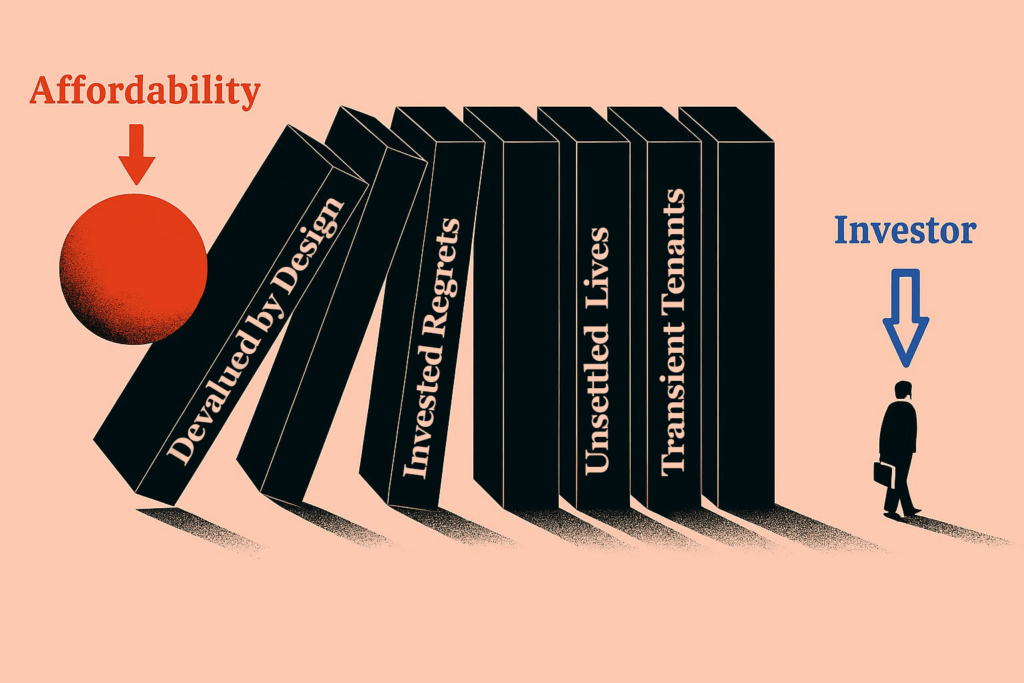
This isn’t just depressing. It’s a failure of imagination.
And it’s costing everyone more than they realize.
4. What If?
What if the real problem isn’t affordability?
Maybe the real problem is how we’ve been defining what a home should be.
What if affordability didn’t have to mean compromise?
What if a compact home could still be complete—offering everything a family needs to live with comfort, beauty, and dignity?
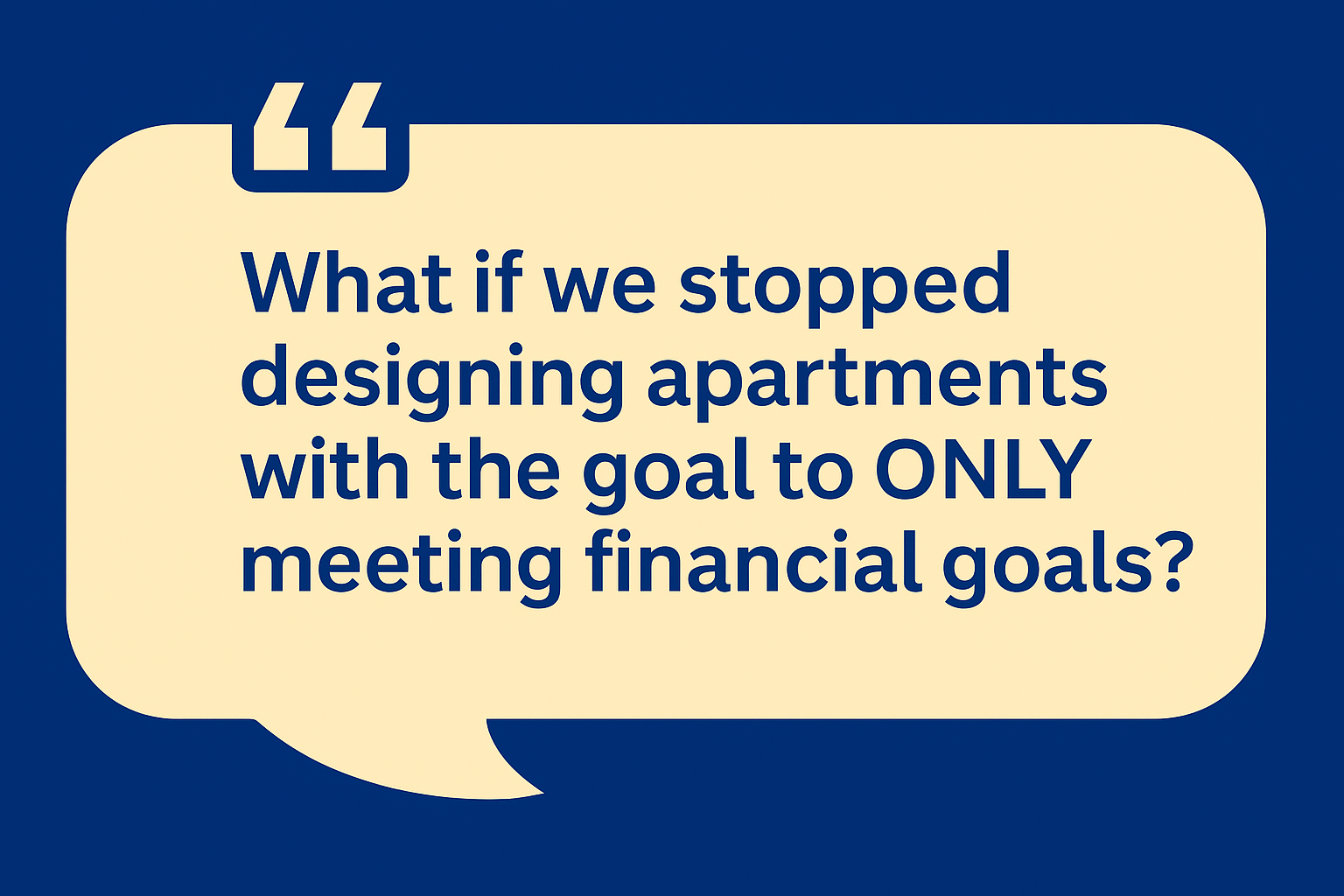
What if we stopped designing apartments to meet just financial targets – and started designing them to support real, everyday life?
Because, your tenant doesn’t wake up feeling good that you got a great price per square metre on your apartment.
They wake up wondering how their space helps them:
- Carry out all the essentials of daily life; cooking, dining, bathing, washing, and sleeping with dignity and comfort
- Host their friends, hang out and connect
- Feel respected by their peers
They want a home that fits their lifestyle.
A home they can feel proud of.
And that’s the problem we’ve been trying to solve from day one.
5. The Smarter Way to Live Big in a Compact Space.
The problem demanded more than just tweaks or workarounds – it required a bold new approach.
And that’s exactly what we’ve created.
A great leap forward. A redefinition
We call it Affordable Luxury.
It’s not just a design style. It’s a new category of affordable housing.
One that prioritizes function, comfort, and livability—within a smart, compact footprint.
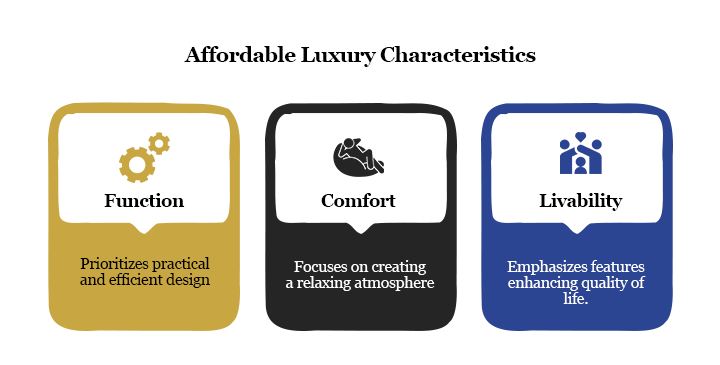
At its core, Affordable Luxury is about giving people the full experience of a real home—without needing excessive square metres or inflated budgets.
That means:
- Homes with defined zones for sleeping, cooking, hosting, and relaxing
- Natural light in every room
- Smart storage throughout—not as extras, but as built-ins for everyday conveniences.
- In-unit laundry—because dignity shouldn’t be outsourced to a shared corridor
- Finishes that last, and layouts that make sense
And it’s designed with both residents and investors in mind.
For residents, it’s a place to grow into—not grow out of.
For investors, it’s a product built for tenant retention, long-term performance, and real-world value.
This isn’t a compromise between affordable and luxurious.
It’s a category that transcends both – proving that you can really have it all.
6. Welcome to Affordable Luxury.
You don’t have to imagine what that looks like.
You can step into it today.
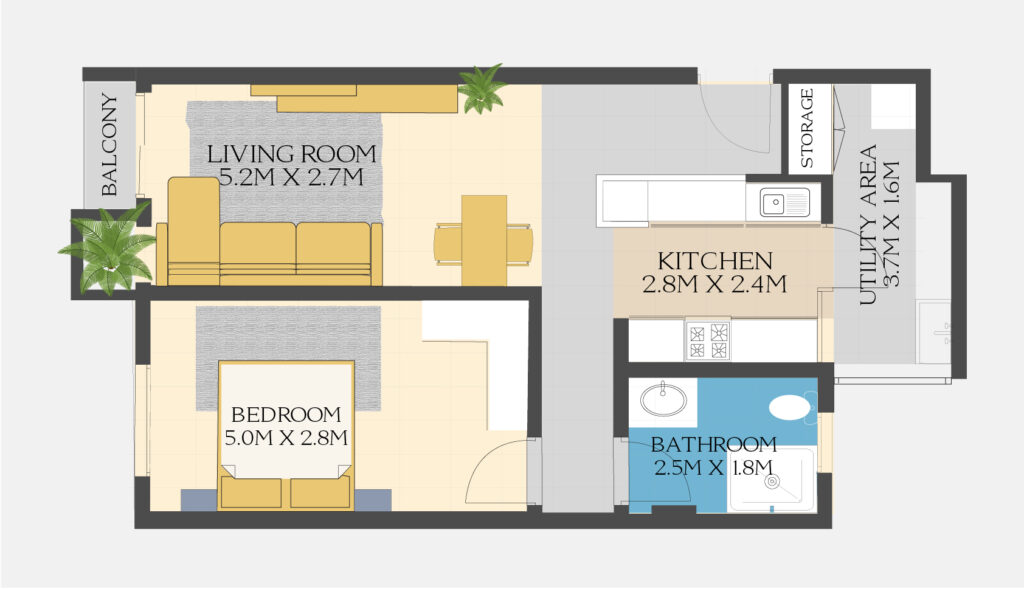
At ParkRoad Residency, we’ve brought this category to life—unit by unit, finish by finish.
Take our 700 sq.ft. one-bedroom apartment, for example:
- It has a dedicated utility room complete, with built-in storage.
- A full-sized kitchen with proper worktops—designed for real cooking, not just aesthetics.
- An open plan dining that flows naturally from the kitchen to lounge.
- All rooms with ample natural light and smart cabinetry.
- And the layout is designed for real life – where every space feels intentional.
It’s expansive and, yes – complete.
And people feel the difference.
Buyers tell us they’ve never seen a one-bedroom layout in this category that feels this functional.
Investors are saying, “it just works – they expect less vacancy, less churn, better returns.“
And it’s already beginning to shape not just how people live, but how they think about value and investment in Nairobi.
7. The New Standard
Because in a city where “affordable housing” has too often meant ugly, tiny and dark, we believe there’s a better way.
A way to design homes that are compact but complete.
Practical but beautiful.
Affordable—but never basic.
At Sapio Homes, we build homes that:
- Tenants want to stay in.
- Investors are proud to own.
- Feel like home.
This are more than ‘affordable developments.’
Its Affordable Luxury. A new standard. A new sub-category.
And we’re just getting started.
If you believe city living can be better.
You’re already part of the movement.